Saturday, 8 April 2017

Alleged Moto E4 Plus with 5,000mAh battery clears FCC

Alleged Moto E4 Plus with 5,000mAh battery clears FCC


“The Moto E4 Plus will sport a 5,000mAh battery, while the E4 is expected to feature a 4,000mAh unit”
Last week, the alleged Moto E4 budget smartphone with the model number XT1723 was cleared by the US Federal Communication Commission (FCC). The phone was spotted on the certification website with a beefy 4,000mAh battery. Now the purported Moto E4 Plus has been cleared by FCC with the model number XT1773.
The listing on the certification website doesn’t reveal many specifications of the Moto E4 Plus. However, it does mention that the phone will feature a massive 5,000mAh battery and will be powered by a MediaTek processor.
There’s no word on when the company is planning to launch the latest Moto E series offerings, but since they’ve just been certified FCC, we expect them to see the light of the day soon.

Thursday, 6 April 2017

Honor 8 Pro with dual-cameras, 6GB of RAM launched: Price, specifications, features

Honor 8 Pro with dual-cameras, 6GB of RAM launched: Price, specifications, features


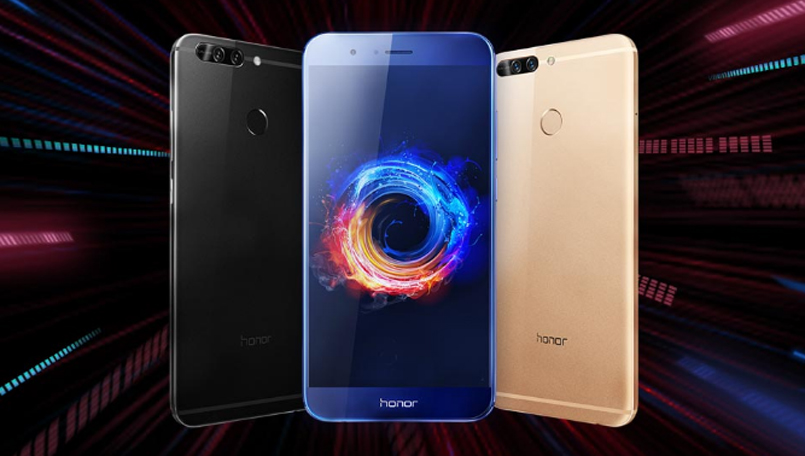
The Honor 8 Pro is a rebranded version of the Honor V9 that the company launched in February this year.


Huawei’s sub-brand, Honor has launched the Honor 8 Pro, which is essentially a rebranded version of the V9. As the name suggests, the Honor 8 Pro is an upgrade to the Honor 8, and comes with more features, and better specifications. These include more battery capacity, a higher RAM, and the device also runs on the newer Android 7.0 Nougat OS. The Honor 8 Pro is launching in select markets including UK, France, Germany, Spain, Italy, and Switzerland and is available for pre-orders at 549 Euros (approximately Rs 38,200). It will start shipping from April 20 in color choices of Navy Blue, Platinum Gold, and Midnight Black .
The Honor 8 Pro (or the Honor V9 as it is known in China), is the latest among the line of smartphones boasting a dual-camera setup. Although it features a bump in terms of other specifications, the camera setup is the same as the Honor 8. So in essence, the camera setup on the Honor 8 Pro includes a pair of 12-megapixel sensors. While one sensor captures in RGB, the other captures details in monochrome. The rear camera setup with f/2.2 aperture further includes laser auto-focus, LED flash, and is capable of 4K video recording. For selfies, the smartphone is equipped with an 8-megapixel camera at the front with f/2.0 aperture.

Honor 8 Pro specifications and features

As noted above, the Honor 8 Pro is a rebranded version of the Honor V9 and there are no changes under the hood for its release in markets outside China. The Pro variant thus features a 5.7-inch QHD (1440×2560 pixels) LTPS LCD display, and is powered by Huawei’s own Kirin 960 octa-core processor paired with 6GB of RAM and 64GB/128GB of internal storage. There is also an option to further expand the storage via microSD card.

It is fuelled by a 4000mAh battery. On the software front, it runs on Android 7.0 Nougat with EMUI 5.1 custom skin layered above. Connectivity options include dual-SIM support, rear fingerprint sensor, NFC, USB Type-C, 4G LTE support, and Bluetooth 4.2.
In comparison, the Honor 8, which was launched in India last year at Rs 29,999, features a slightly smaller 5.2-inch full HD (1080p) display with 2.5D Corning Gorilla Glass protection on top. It is powered by Kirin 950 octa-core processor paired with 4GB of RAM and 32GB of expandable internal storage. The camera specifications remain the same as on the Pro model. The Honor 8 is fuelled by a 3000mAh battery and runs Android 6.0.1 Marshmallow wrapped under EMUI .
Although there is still no word on Honor 8 Pro’s launch in India, if the smartphone does make it to the market, it will be competing against top flagship smartphones the likes of OnePlus 3T and Asus Zenfone 3 (ZE552KL) among others.  These smartphones are also in the sub-Rs 30,000 category.
The OnePlus 3T features a 5.5-inch full HD (1920 x 1080 pixels) AMOLED display and is powered by Qualcomm Snapdragon 821 quad-core chipset clocked at 2.35GHz. It is paired with 6GB of RAM and 64GB of internal storage which can further be expanded up to 128GB via microSD card. While the OnePlus 3T does stand neck and neck with the Honor 8 Pro when it comes to the processor and RAM, it falls slightly behind when it comes to camera and battery. For photography, the OnePlus 3T features 16-megapixel cameras both in the front and rear. Fuelling the device is a 3,400mAh battery. On the software front, it runs Android 6.0 Marshmallow based Oxygen OS. 
The Asus ZenFone 3 (ZE552KL), on the other hand, features a 5.5-inch full HD (1920×1080 pixels) display with 2.5D curved glass and Corning Gorilla Glass 3 protection. It is powered by a Qualcomm Snapdragon 625 64-bit octa-core chipset clocked at 2GHz paired with Adreno 506 GPU, 4GB of RAM and 64GB on-board storage. For photography, it is equipped with a 16-megapixel PixelMaster 3.0 rear camera with f/2.0 aperture, laser auto-focus, and support for PDAF and OIS. Upfront, it features an 8-megapixel selfie camera with f/2.0 aperture. It is fuelled by a slightly lesser 3,000mAh battery. It runs Android Marshmallow 6.0 wrapped under the ZenUI 3.0. It further includes a fingerprint scanner and offer dual-SIM support.

Reliance Jio Withdraws Free Data Offer on Telecom Regulator’s ‘Advice’

Reliance Jio Withdraws Free Data Offer on Telecom Regulator’s ‘Advice’


WATCH VIDEO HERE : JIO Summer Surprise OFFER ENDS

Jio says it will accept the telecom regulator’s advice and will discontinue the complimentary benefits given under the ‘Summer Surprise’ offer. However, users who have already signed up will continue to enjoy free data for next three months. 


After 200 days worth of promotional offers, Reliance Jio’s free data bonanza has come to an end. The company, on Friday, withdrew its three-month ‘Surprise Summer’ free data offer after the Telecom Regulatory Authority of India (TRAI) strongly advised the Mukesh Ambani-backed telecom player to do so. 
Hours after TRAI’s communication, Jio issued a quick statement saying that it was “in the process of fully complying with the regulator’s advice”.
“Today, the Telecom Regulatory Authority of India (TRAI) has advised Jio to withdraw the 3 months complimentary benefits of Jio Summer Surprise. Jio accepts this decision,” the company said.
Reliance plans on withdrawing the three months complimentary benefits under its ‘Summer Surprise’ offer “as soon as operationally feasible” over the next few days.
Curiously, however, the company maintains that all customers who have already subscribed to its Jio Prime service and the Jio Summer Surprise offer “prior to its discontinuation will remain eligible for the offer”. In other words, users who managed signed up over the last six days will enjoy free data for the next three months.
How does Jio’s offer work?
The ‘Summer Surprise’ offer is the latest in a series of promotional plans announced by the company.
From September 2016, when Reliance Jio officially launched its services, the company has come out with a number of promotional plans that allowed it to offer its services for free. The first promotional offer (Welcome Offer) was valid until December 31, 2016 while the second promotional offer (Happy New Year offer) was due to end March 31, 2017.
In February 2017, the company announced its Jio Prime service, which was priced at a recurring annual fee of Rs 99. The Jio Prime service allows users to access the company’s services (online movie streaming, music streaming etc) for free and also gives access to better-bang-for-the-buck voice and data packages. By the end of March, the company announced that it had “over 72 million” customers who had signed up for Jio Prime.
At this point, many analysts had predicted that Reliance would find a way to extend its free data offer. One week ago, on cue, the company announced that its users could sign up for a “Summer Surprise” offer which would give them another three months of complimentary data (free 1GB data per day at 4G speeds). They could sign up for this new offer by acquiring a Prime membership and choosing the company’s monthly Rs 303 plan. If users did this, they would get to enjoy free data services until the end of June, 2017. The Rs 303 plan that users paid for would only kick in from July 1, 2017 – after the three months of free data got over.
Consequently, the deadline to sign up for Jio Prime was extended until April 15, 2017. After TRAI’s advice, this deadline extension and the complimentary benefits under the Summer Surprise offer has now been discontinued.
However, crucially, Reliance Jio has said that people who had already signed up for the Summer Surprise offer (sometime between March 31 – April 6) would get to avail of the free data. It also warns that it will take a few days to the offer.
TRAI problems?
 Critics of the company have argued that Jio’s promotional offers violated the telecom regulator’s past orders on how promotional schemes can be offered. In particular, incumbent operators such as Airtel and Vodafone have argued that Reliance Jio’s promotional offers violate a 2002 TRAI letter that restricts the validity of such offers to 90 days.
The Department of Telecommunications (DoT) has also taken a similarly negative view. Before he moved onto becoming India’s ambassador to the World Trade Organisation, former telecom secretary JS Deepak had lashed out at TRAI for not curbing Reliance Jio’s offers and had said that the free data offers had hurt the government’s collection of licence fees, spectrum usage charges (SUC) and service tax; all of which are based off a company’s revenue.
The battle over Reliance Jio’s free pricing strategy has spilled over from the DoT and TRAI to regulatory bodies such as the Telecom Disputes and Settlement Tribunal (TDSAT) and even the Competition Commission. The telecom regulator, under chairmanship of R S Sharma, has over the last two months been reluctant to clamp down on Reliance Jio’s promotional offers. In fact, less than a month ago, TRAI had argued before the TDSAT that Reliance Jio had not violated any rules by refusing to charge for its services.

Tuesday, 4 April 2017

Xiaomi Redmi Note 4 at Re. 1, Redmi 4A Rose Gold, and Other Deals on Offer at Mi Fan Festival

Xiaomi Redmi Note 4 at Re. 1, Redmi 4A Rose Gold, and Other Deals on Offer at Mi Fan Festival

Xiaomi has announced that it will host the Mi Fan Festival in India on Thursday, April 6, where it is putting smartphones, fitness bands, and accessories on sale on the Mi.com site. The Chinese brand is also hosting an app-only flash sale, and giving out goodies, bundle offers and putting up other products on sale for fans in India.

Xiaomi Re. 1 flash sale

First up, Xiaomi will host a Re. 1 flash sale to let users buy the Redmi Note 4 for just that much. It is an app-only event so you must download the app and register to be a part. This sale will begin at 10am IST, and 20 Redmi Note 4 will be up for grabs on the Mi Store app. Also, there will be a sale at 2pm IST where 40 Mi Band 2 and 50 10000mAh Mi Power Banks will be up for grabs for Re. 1 as well.
The Redmi Note 4 smartphone has already crossed 1 million in sales in India, and was made available offline earlier as well. The company started taking pre-orders for the smartphone on March 31, and will make it available starting April 6 at 12pm IST. Even the Redmi 4A Rose Gold will be made available at the same time, and the device was launched in India only last month, garnering record numbers in first sale.

Xiaomi Mi Fan Festival smartphone deals

The one-day Mi Fan festival will also make the Redmi 4A Rose Gold variant and Redmi Note 4 available for Rs. 5,999 and Rs. 9,999 respectively. Xiaomi Redmi 3S Prime, Mi Max Prime, and the Xiaomi Mi 5 will be up for grabs as well on the Mi.com website. Xiaomi is offering Rs. 100 off on the Soft Case if you purchase the Xiaomi Redmi 3S Prime (the soft case is priced at Rs. 349), and it is offering zero present interest EMI on the purchase of the Mi Max Prime. You also get up to Rs. 200 off on purchasing the Mi Protect accidental and liquid damage insurance for your Xiaomi smartphone, and the prices for this defer basis of the device. You can check the prices here.

Mi Fan Festival deals on other Xiaomi products

There is also up to Rs. 500 off other Xiaomi products like air purifier, earphones, VR Play, Mi Band, and more. The Mi Air Purifier 2 and Air Purifier Filter bundle can be purchased for Rs. 10,998 instead of Rs. 12,498. Also, the holiday bundle which includes the Bluetooth Speaker, Selfie Stick, and In-Ear Headphones Basic Matte variant can be purchased for Rs. 3,497 instead of Rs. 3,797.
The Fitness Bundle that includes the Mi Band 2 and Mi Capsule Earphones can be bought for Rs. 2,598 instead of Rs. 2,998. The Power Bundle that includes the standard adapter, the USB cable, and a 20000mAh Mi power Bank is priced at Rs. 2,497 instead of Rs. 2,797. And lastly, the Pro Bundle that includes the Mi In-Ear Headphones Pro HD and the 10000mAh Power Bank Pro are going to be priced at Rs. 3,498 instead of Rs. 3,998.
Before the sale, Xiaomi is also giving out discount coupons for the Thursday (April 6) sale every day till Wednesday (April 5). The sale starts at 10am IST till the stock lasts, and the coupons are Rs. 50, Rs. 100, Rs. 200, and Rs. 500 discount on the purchase of accessories on the Mi Fan Festival Day. We recommend you to register on Mi. com and the app, and fill in all the shipping and card details beforehand to make the most out of the flash sale, and other deals.

iPhone 8 leak offers HUGE hint about the look of Apple’s next smartphone – and it’s very similar to Samsung

iPhone 8 leak offers HUGE hint about the look of Apple’s next smartphone – and it’s very similar to Samsung

APPLE might have accidentally revealed one of the key features of the iPhone 8.
It’s put in a multi-million pound order for one very important piece of technology which is likely to take centre stage on its top secret smartphone.

Apple placed orders for bendable organic light-emitting diode (OLED) panels – the kind you find on Samsung phones – to use in 70 million smartphones, according to sources speaking to Nikkei Asian Review.
OLED screens are typically used in fancy smart TVs because they offer high colour and motion quality (making it perfect for watching Netflix)  without munching too much power.
The large order of the premium screens would suggest Apple expects its most expensive smartphone to fly off the shelves following its launch in September.

David Hsieh, senior director at research company IHS Markit said: "Apple has ordered 70 million units of OLED panels from Samsung this year, while Samsung is preparing to churn out as many as 95 million for Apple in 2017, in case demand exceeds expectations."
The revelations appear to confirm rumours that the premium tenth anniversary phone will feature an infinity screen similar to the Samsung S8.
The sources claimed the two OLED iPhones will have a 5.2-inch screen and no home button, which will be sold alongside standard 4.7 and 5.5-inch devices with LCD screens and home buttons.
All three will be charged wirelessly, it's been claimed.
At least one model could have a 3D sensor - presumably the snazzy 5.2 OLED - that supports facial recognition.
Although they might have second thoughts after Samsung's face unlock feature was easily bypassed using a selfie.

Monday, 3 April 2017

Xiaomi Mi 6: New leaks reveal box, front panel and hands-on images

Xiaomi Mi 6: New leaks reveal box, front panel and hands-on images

As the launch for Xiaomi’s next flagship draws closer, we are seeing more leaks emerging. In the past we had heard that it will feature the new Snapdragon 835 chipset, a dual camera setup and more. Today we have a more scoop around the device including some alleged hands-on pictures. Let’s go through them one by one.
Firstly there is the official box for the handset. Two different Weibo accounts have leaked two different coloured boxes of the handset. Both the boxes also have different specifications.

The specifications include a 5.15-inch display, Snapdragon 835 processor clocked at 2.45GHz, 6GB of RAM and 128GB of storage. For the cameras there is a 30MP sensor with optical image stabilisation at the back and an 8MP camera on the front. The box also mentions a 4,000mAh battery, dual SIM slots, and a USB Type-C port.

The second box which is the white one, mentions a 5.15-inch display with a 2.5D glass, a Snapdragon 835 processor with no mention of the clock speed. RAM on this version is 3GB while storage is 64GB. Even the camera is different, as the box mentions a 12MP rear shooter and a 4MP ultra pixel sensor on the front just like the Mi 5. Even the battery is smaller rating at 3,200mAh.

Rumours suggest the white box is probably the base variant while the black box is the higher ‘Pro’ variant.

Then we have an image of white and black front glass panels of the device. We can see that handset will have narrow bezels although the area on top and bottom are going to be fairly large. There are a bunch of openings above the display which are of course for the camera, earpiece and light sensors. It is being speculated that there is a third hole which could be for an iris scanner, but we have our doubts about that. Below the display is the opening for the front home button which has an oval shape. It is quite large and rumours suggest that the Mi 6 will feature an underglass ultrasonic fingerprint scanner used on the Mi 5S but with a fast sensor.

Finally there are a couple of leaked images of the handset itself, but this one is apparently the Mi 6 Plus. The leaked highly-glossy black coloured variant shows the front panel of Mi 6 Plus with narrow bezels. The physical home button placed below the display will also house the fingerprint scanner. At the back we can see a dual-camera setup with dual a LED flash arrangement. These to cameras are said to be a pair of 12 MP Sony IMX362 sensors.

Rumoured specifications of the Mi 6 Plus include a 5.7-inch full HD display, a Snapdragon 835 SoC with 4 GB of RAM while some also suggest 6 GB and 8 GB RAM variants. Other rumoured features include 64GB and 128GB storage options, going all the way up to 256 GB, and 8MP front camera, Android 7.0 Nougat with the latest edition of MIUI and a 4,500 mAh capacity battery. Pricing is said to start at 2,599 Yuan (Rs 26,000 approx) going all the way up to 3,499 Yuan (Rs 35,000 approx).

Samsung Galaxy S8's new home button is its most innovative feature

Samsung Galaxy S8's new home button is its most innovative feature


Samsung finally unveiled the Galaxy S8 to the world a few days ago and it has set the tech world on fire with its stunning design and 'Infinity' display.

The launch of the Galaxy S8 marks an extremely crucial and pivotal time in Samsung Mobile's history. The device has to be embraced warmly by customers and not face any problems or issues if the company hopes to restore its position and reputation in the market, which took a big dent due to the Galaxy Note 7 debacle.
While everyone is talking about the Galaxy S8's stunning new 'Infinity' display with a 18.5:9 aspect ratio, Iris Scanner, face recognition and Bixby, there is one more feature of the S8 which is not receiving the attention it deserves.
The last few years have seen almost every major Android manufacturer ditching physical keys for on screen buttons. From the first Galaxy S smartphone in 2010, all the way to the ill-fated Galaxy Note 7 in 2016, Samsung has doggedly stuck with a physical home button on its smartphones.
All that has changed with the Galaxy S8, with the company finally embracing on screen buttons. Like every other Android smartphone out there, the S8 features a bar of three buttons - back, multitasking and home on the bottom of the screen.
But where Samsung's implementation differs from the rest is the fact that the company has made the home button pressure sensitive in a bid to aid the transition from a physical key to a virtual on screen button.
Samsung has finally embraced on screen buttons with the Galaxy S8
A somewhat similar approach was seen in the iPhone 7 last year, in which Apple replaced a physical button with a force sensitive capacitive button. This new static button uses Apple's taptic engine to stimulate the feeling of a click.
Samsung's approach however takes things a step further. Users can push the bottom of the screen to activate the home button even when a full screen application is covering the three button overlay. This is a very clever move in our opinion and does away with one of the single biggest drawbacks of on screen buttons - the need to always bring up the three button array in full screen apps in order to use the home button.
Another area where Samsung's implementation scores big over Apple's is the fact the headphone jack did not have to die to make way for the pressure sensitive home button as in the iPhone 7. One of the main reasons cited by Apple for ditching the headphone jack (apart from 'courage') was to accommodate the new updated taptic engine.
This decision to ditch the physical home button, with all of its positives has led to some compromises as well. The fingerprint sensor had to be relocated to the back in order to accommodate the 'Infinity' display and pressure sensitive home button. While we have seen several perfectly usable implementations of rear mounted fingerprint scanners on smartphones such as the Google Pixel and LG G5, Samsung's placement is odd and un-ergonomic.
Users can push the bottom of the screen to activate the home button even when a full screen applications is covering the three button overlay
Instead of placing the smartphone below the camera lens (in the middle of the back panel), Samsung has decided to place it right next to the rear camera on the right hand side. Not only is it difficult to locate blindly, its proximity to the camera lens will surely lead to a lot of smudges and fingerprints on the camera lens over time.
Samsung is relying heavily on the fact that people will eschew the fingerprint sensor in favour of their new Iris scanning and face recognition technologies in the Galaxy S8. However a lot of early reports have claimed that the Iris scanner is not as convenient as a fingerprint sensor and the face recognition can be fooled easily with a picture.
So there are a few caveats that come with the new home button placement but all in all, in our opinion, this is a great move and is the best implementation of on screen buttons we have ever seen on a smartphone. All Samsung needs to do is fix the location of the fingerprint scanner in the Galaxy S9.

Galaxy S8 specifications

The Samsung Galaxy S8/S8+ are powered by Qualcomm's latest flagship processor - the Snapdragon 835 in the U.S, Japan and China and the 3GHz Exynos 8895 processor in other regions including India alongside 4GB of RAM and 64GB of internal storage expandable via a microSD card (up to 256GB).
The only difference between the two smartphones is their display and battery sizes. The Galaxy S8 comes with a WQHD+ 5.8-inch display and a 3,000mAh battery, while the Galaxy S8+ features a WQHD+ 6.2-inch display and a bigger 3,500mAh battery. Both smartphones come with fast charging and wireless charging support.
On the imaging front, both smartphones come with a 12MP 'Dual Pixel' camera at the rear with an aperture of f/1.7 and laser autofocus alongside an 8MP front facing camera with an aperture of f/1.7.
Additionally, both smartphones come with IP68 dust and water resistance, Samsung Knox, Samsung Pay, 4G LTE support and earphones tuned by AKG.

Apple is developing its own graphics chips for the iPhone


Imagination Technologies, the British chip designer that provides PowerVR graphics processors for use in the iPhone and iPad, has said that Apple will no longer be licensing its technology in less than two years’ time. In a statement, Imagination says that Apple has notified the company that it’s “working on a separate, independent graphics design in order to control its products and will be reducing its future reliance on Imagination’s technology.”
The development is a major blow for Imagination, which relies on Apple for about half of its revenue and will stop receiving royalties on iPhone and iPad devices within 15 to 24 months from now. Apple currently holds more than 8 percent of the company; the Financial Times reported a year ago that Apple had held acquisition talks with Imagination but decided against a full takeover.
If what Imagination says is true, we could see an A-series chip with both a fully Apple-designed CPU and GPU as early as next year’s iPhone range. Apple has already found success in the field of CPU design, with ARM-based processor cores that often vastly outperform those of competitors. But the particulars of any new GPU design are likely to come under heavy scrutiny: Imagination is skeptical that Apple would be able to come up with chip technology that wouldn’t infringe upon its patents.
From the statement:
“Apple has not presented any evidence to substantiate its assertion that it will no longer require Imagination’s technology, without violating Imagination’s patents, intellectual property and confidential information. This evidence has been requested by Imagination but Apple has declined to provide it.
Further, Imagination believes that it would be extremely challenging to design a brand new GPU architecture from basics without infringing its intellectual property rights, accordingly Imagination does not accept Apple’s assertions.”
All of this sets the stage for an intriguing showdown — depending on what Apple manages to develop in its labs, we could either have a patent battle or what Imagination believes would have to be a radically new GPU design sometime next year. Imagination says it’s discussing “potential alternative commercial arrangements” with Apple, however, so the two parties may come to an agreement before things get to that stage.

Sunday, 2 April 2017

OnePlus 3, 3T gets new Open Beta update, brings Pixel-Like launcher, Quick Pay for India and more


Open Beta series for the OnePlus 3 and OnePlus 3T are generally where the company tests out new features before they can roll it out to all the users with a stable update.


OnePlus has been pretty prompt when it comes to Android updates this year. For the record, OnePlus 3 and OnePlus 3T are one of the only few non-Pixel or non-Nexus devices, currently, to run on Android 7.1.1 Nougat and following the pattern, the company has now rolled out the next Open Beta update for both the devices. Before we begin with the changelog that the new beta update brings in, Open Beta series for the OnePlus 3 and OnePlus 3T are generally where the company tests out new features before they can roll it out to all the users with a stable update. In other words, if you are running on the latest stable version which is probably OxygenOS 4.1.1 (Android 7.1.1) on your OnePlus 3 and OnePlus 3T, you will need to install the update via USB sideload which involves wiping user data. 

Coming to the new features, the new Open Beta 13 and Open Beta 4 brings in an all new launcher which resembles a lot to the Pixel launcher. You get round icons, swipe up for app drawer which has also been redesigned and a Pixel like app drawer. Further, the new update also introduces Secure Box inside the File Manager where you can encrypt all your files which you would like to keep private. Adding to this, OnePlus has also introduced something called 'Notficiation denoising' which will basically allow prioriy notifications to peek notifications and will let you grant only the most important apps and their notifications the ability to interrupt you. We also get Quick Pay for India, which will allow one to set up a QR-based quick pay feature that can be quickly accessed while the screen is either on or off with a long press of the home button. The Quick Pay feature is only available for Paytm, Wechat or Ali Play, as of now. Apart from this, OnePlus has also introduced a Gaming Do Not Disturb mode which would lock touch capacitive buttons to prevent accidental touches while playing a game in landscape mode. Also, we can now schedule Night Mode based on the timing. 

Here is the full changelog for Open Beta 13 for OnePlus 3 and Open Beta 4 for OnePlus 3T
>>All new launcher, added support for shortcuts on 7.1.1
>>Redesigned app drawer
>>Redesigned UI for launcher settings
>>Added status bar icon option to display real time network speed
>>Added Notification Denoising
>>Added Gaming Do Not Disturb mode
>>Added automatic Night Mode
>>Added Secure Box for file encryption
>>Optimized touch latency
>>Optimized camera EIS for videos
>>Improved contacts management with linking and merge functions
>>Added quick pay option for India
>>Bug fixes and general improvements

If you are running on the previous Beta build for your device, you should get an OTA update notification soon, otherwise, follow this guide here to install this Open Beta build for your OnePlus 3 and OnePlus 3T. 

Xiaomi Mi 6 box says 30MP camera inside

Xiaomi Mi 6 box says 30MP camera inside

The Xiaomi Mi 6 is due to be unveiled sometime this month (April 16 has been mentioned) and there's no shortage of leaks claiming to detail the upcoming top-end device. Well, here's a new one.
What is allegedly the Mi 6's retail box comes with a full specsheet on the back and we're immediately drawn to that 3000 number. Our fluency in Chinese is debatable (not really, we don't know the least bit of it), but we've learned so much as to know that in this context it stands for a 30MP camera, and that's a lot of pixels.


Alleged Xiaomi Mi 6 retail box
We hadn't heard that particular detail about the Mi 6 and we're not quite sure what to make of it. Sony used a 24.8MP sensor in the Xperia Z5 generation and then the XZ, and that's about as high a pixel count as we've seen lately. And even the Japanese company switched to a lower-res 19MP imager for the XZs and XZ Premium, so megapixels aren't what they once were. And that 24.8 sensor was one of the largest already (Type 1/2.3"), so 30MP certainly means either tiny pixels or a (relatively) huge sensor with implications that brings on lens design and body dimensions. Alternatively, and that would an odd way of presenting it, there could be 2x15MP cameras - dual cameras on the Mi 6 are a possibility.
We'll keep dwelling on that for a couple more weeks, but in the meantime, back to the box. Another interesting number, and that's a more universally appealing one, is the battery capacity - 4,000mAh for the 5.15-inch Mi 6 promises pretty great battery life. That and the 10nm Snapdragon 835 that should be inside. The pictured box also states that this particular unit comes with 6GB of RAM and 128GB of storage, so a top-specced one it is - a 4GB variant should exist as well.

Five reasons why Samsung Galaxy S8 is not a great upgrade for those with the S7

Five reasons why Samsung Galaxy S8 is not a great upgrade for those with the S7


The Galaxy S8 isn't exactly a compelling smartphone over the Galaxy S7. Here are five reasons why you may hold off upgrading to the new phone.


Samsung Galaxy S8 has been unveiled, bringing to an end months of leaks and anticipation about the company’s first high-profile launch after the Note 7 disaster. Not surprisingly, both the Galaxy S8 and S8+ sport bezel-less displays, modern looking designs, a new intelligent digital assistant “Bixby” and the best possible hardware.
There’s no doubt that the Samsung’s Galaxy S8 is likely to be the best Android smartphone of the year. However, I still think that there aren’t many compelling reasons to switch to the Galaxy S8 or Galaxy S8+ just yet. Here are five reasons why you may hold off upgrading to the new phone.
Awkwardly positioned fingerprint scanner
I do appreciate Samsung’s vision for a bezel-less future, but the Galaxy S8 isn’t perfect. To me, the placement of the fingerprint scanner on the Galaxy S8 is its biggest design flaw. The fingerprint scanner has been moved to the rear, right next to the camera. Why? Because the display can’t recognise fingerprints anymore. Well, that means the fingerprint is practically useless until you pick up the phone. Also, I can’t unlock the device anymore while it’s charging. More importantly, there’s always a chance of you end up smudging the Galaxy S8’s camera lens more often. To me, it all seems to be a major design flaw though the rear fingerprint scanner is finding popularity among many Android manufacturers.
No major camera upgrades
I still rate the Galaxy S7 as one of the best camera smartphones in the market. And I expected the Galaxy S8 to be even better than its predecessor in the mobile photography department. Surprisingly, Samsung has fitted the same Galaxy S7 camera into the Galaxy S8. Technically speaking, you still get the 12-megapixel, f/1.7 aperture shooter with optical image stabilisation (OIS) and 4K recording. There are some advancements in image processing too. However, the phone will struggle to deliver better zoom and depth of field, unlike the iPhone 7 Plus. The latter features two cameras on the rear, each with 12MP sensors: one standard wide angle 12MP lens alongside a telephoto lens with an optical 2X zoom.
"watch the camera comparison with samsung galaxy s7 "

That fancy display
On paper, at least, the Galaxy S8’s “Infinity” display sound really cool. But I don’t see the real benefit of having a higher aspect ratio (Samsung claims 18:5:9). For example, if you want to watch a video on YouTube on the Galaxy S8’s gorgeous screen then be ready to bear those black bars. That’s because the content that can watch on the YouTube is meant to be suited on a 16:9 display.
Note 7 debacle still haunts many
The Galaxy S8 and S8+ are the first smartphones released since the Note 7 recall, and they’re the ones to go through the company’s eight-step testing and inspection procedure. Of course, Samsung would like you to forget about the Note 7. Still, as a user, I might want to wait for a few more months to make sure the Galaxy S8 is actually as safe as Samsung claims it is.
If Samsung didn’t manage to win over with the bezel-less Galaxy S8, there is a wide range of alternatives out there that might suit your needs. The iPhone 7 Plus is one such example. Not actually a bezel-less smartphone, but this Apple flagship is a very capable phone at the end of the day. The Google Pixel XL sports what claims to be the most advanced camera smartphone in the market.  And yes, I don’t think there is a better smartphone than the Pixel XL to experience stock Android. And a device such as OnePlus 3T is equally good – at half the cost of the Galaxy S8. If you already have a Galaxy S7 edge, I don’t see a reason to switch to the Galaxy S8 or Galaxy S8+ unless you really belong to the fanboy club.

Saturday, 1 April 2017

HANDS-ON WITH THE NEW SAMSUNG GALAXY S8+

HANDS-ON WITH THE NEW SAMSUNG GALAXY S8+


It's official, there is no Galaxy S8 Edge – instead there’s the regular Galaxy S8 flagship and the S8+ phablet, which features a huge 6.2-inch screen. Though it sounds huge, having had some hands-on time with the S8+ I can't help but be impressed and feel it could be the phablet to own this year.
SAMSUNG GALAXY S8+ RELEASE DATE AND PRICE

The Galaxy S8+ goes on sale globally on April 28 for £779.

WATCH THE BENCHMARK COMPARISON WITH SAMSUNG S7 EDGE HERE

Samsung Galaxy S8 vs Samsung Galaxy S7 Edge Antutu Benchmark

SAMSUNG GALAXY S8+ SPECS

  • 6.2-inch quad-HD Infinity Display (AMOLED)
  • Samsung Exynos 8895 (Europe and Asia) or Qualcomm Snapdragon (USA)
  • 4GB RAM, 64GB storage (microSD up to 256GB)
  • 3500mAh battery with wireless and fast charging
  • Rear camera: 12 megapixels, f/1.7 aperture and dual-pixel sensor
  • Front camera: 8 megapixels, f/1.7 and autofocus
  • Iris and fingerprint scanner
  • Samsung Bixby personal assistant
  • Android 7 Nougat with Google Assistant
  • Headphone jack, NFC and IP68 water-resistance
The S8+ corners are curved, just like the LG G6, to maximise the amount of space the screen covers and make the phone almost bezel-less. Not having a distracting screen surround makes everything so much more immersive, and that feeling is only exaggerated by the sloping curves that help the screen blend into the metal body.
The display itself is absolutely stunning. The S8+ has an AMOLED panel with a quad-HD+ 2660 x 1440 resolution that looks super-sharp. For me, it’s Mobile HDR (high dynamic range) that could really be the killer addition, however. Samsung says this is the first ever phone with the Mobile HDR Premium stamp. While it wouldn’t go into details about exact specifications, Samsung has had the S8 approved by the UHD Alliance, which bodes well.


HDR gives you richer colours, inkier blacks and better contrast, and generally makes things look more realistic on-screen. There were some HDR demos on my device and they looked amazing, but you’ll also be able to stream HDR shows from Amazon Prime and Netflix with an app update. I don’t think I'll be ditching my 4K television to watch everything on a phone, but these new features seriously improve the media bingeing experience.
One side effect of the stretched 18.5:9 display is that there’s no longer space for physical keys on the phone's front. The fingerprint sensor's been switched to a rather awkward position on the back, next to the camera sensor, and the others are now virtual buttons.
Apparently Samsung couldn’t finalise a patent for embedding the sensor inside the actual display, and it certainly shows. Bunging it next to the camera feels rushed, but I'm sure it’s something you’ll get used to.


The Samsung Galaxy S8+ is a gorgeous phone and comfortably one of the slickest I've ever used, but I still prefer the smaller S8. The S8+ isn't hard to hold, but the various curves and a slightly slippery glass back make it feel ever so slightly precarious in the hand. That said, if you like big phones then you'll love the S8+.
Inside, the 8+ is almost identical to the regular S8, and that’s a good thing. Power comes from either an Exynos 8895 or Snapdragon 835 SoC, and there’s 4GB of RAM and 64GB of storage. It’s a speedy setup, but for me it'll be the power-efficiency upgrades Samsung's promised that will be most important.
The S8+ has a fairly small 3500mAh battery – typical phablets seem to range from 3720mAh to 4000mAh. As a result the S8+ CPU is going to have to be much more efficient for the phone to last a full day.
Though the Samsung Galaxy S8+ offers impressive improvements over the S7 and S7 Edge in almost every area, the rear camera is pretty much the same.

The S8+ doesn't have a dual-sensor system. Instead there’s a single 12-megapixel sensor on its back with a wide f/1.7 lens that uses the same dual-pixel tech as the S7. A new multi-frame image processor takes three shots every time you snap, reducing blur and leaving you with a sharper single photo.
The front camera has seen a bigger upgrade. The new 8-megapixel sensor has an f/1.7 aperture and there’s autofocus too, which is still a rarity on selfie cameras.
While a bigger improvement would've been welcome, the S7 still has a fantastic camera and will meet most people's needs. I’ll have to use the S8+ for longer to see if it’s now as good as my current favourite camera-phone, the Google Pixel.
Two of the biggest new additions to the S8 are software-related: Bixby and DeX. The first is Samsung’s new Siri rival, which was actually unveiled a few weeks ago.
Bixby is dotted throughout the OS, in the camera and its own dedicated homescreen. Like Siri, you can ask it questions and it’ll carry out basic tasks, and you don’t have to utter an awkward ‘wake word’, as there’s a button solely to open Bixby under the volume rocker. The UK won’t get the full use of Bixby’s features until later in the year, when the service is optimised for British English. At launch it will only support Korean and US English.

DeX is a stranger addition. On paper it's basically a clone of Microsoft’s Continuum that lets you convert the device into a desktop Android PC using a sold-separately dock. The dock lets you plug the S8+ into an HDMI-equipped monitor.
It sounds odd, but I was impressed with DeX during my demo.The way apps jump between phone and tablet versions on the big screen depending on how you resize them is really slick, as is the system's integration with the actual phone features, such as SMS messaging. I loaded up about 10 browser tabs, opened a load of Android apps and the full Office suite, and the docked S8+ continued to run like a charm.
Fans in the dock help it stay cool, and there are two USB sockets and an Ethernet port on the back for peripherals and the like.
Samsung Connect is another new addition. It works like Apple’s Home, and lets you connect the S8+ to a SmartThings hub and control your entire smart home from one screen. It’s cool, but you’ll need to be heavily invested in the SmartThings ecosystem to make full use of it.
FIRST IMPRESSIONS
Samsung could have the phone of the year right here – and it’s only March. The S8+ is a stunning piece of tech that redefines what a phone should look like. It also ticks all the right boxes when it comes to hardware, coming with a gorgeous display, refined water-resistant design, expandable storage and a great camera setup.The size might put some off, but others will adore the huge canvas.

Share ||Comment ||ViewAll